Fraud detection guides
Explore evidence, decision methods, false positives, API integration, cost, account relationships and financial protection.
Evidence, implementation questions and buying trade-offs for teams evaluating application protection.
Latest guides
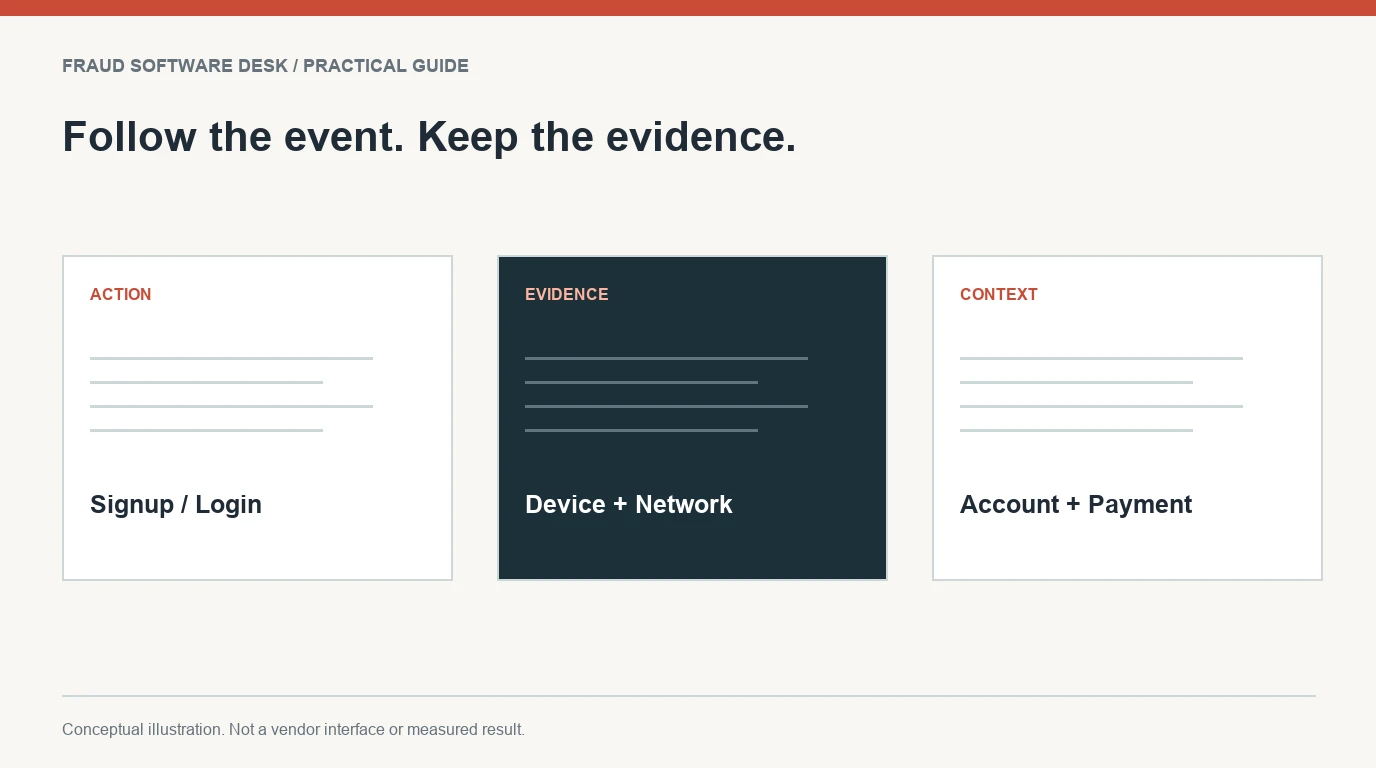
How to detect online fraud across the customer journey
Learn how device, network, account and transaction evidence detect online fraud at signup, login, checkout and payout, with an event-based evaluation plan.
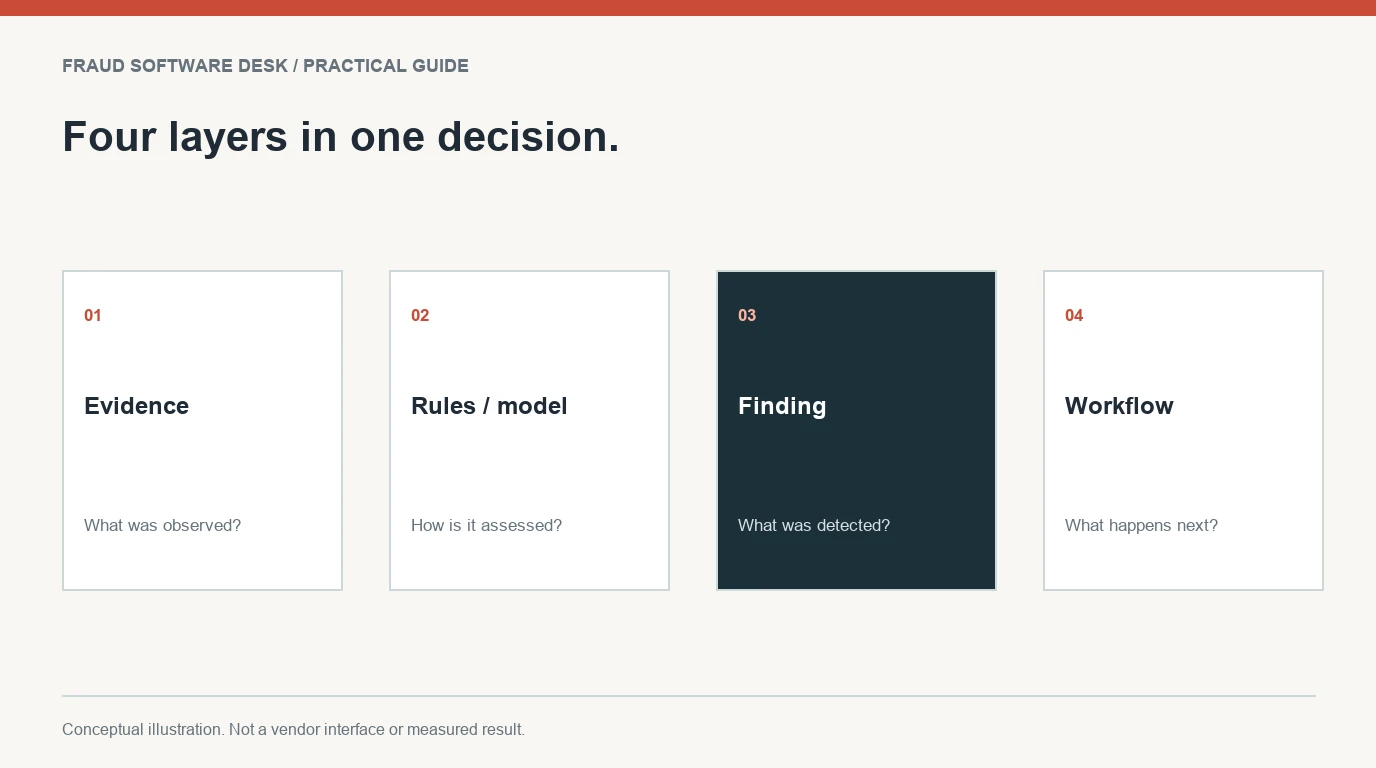
Fraud detection: rules, machine learning and device intelligence
Compare rules, machine learning, device intelligence and workflows. Learn which layer explains a decision and how to combine them without losing context.
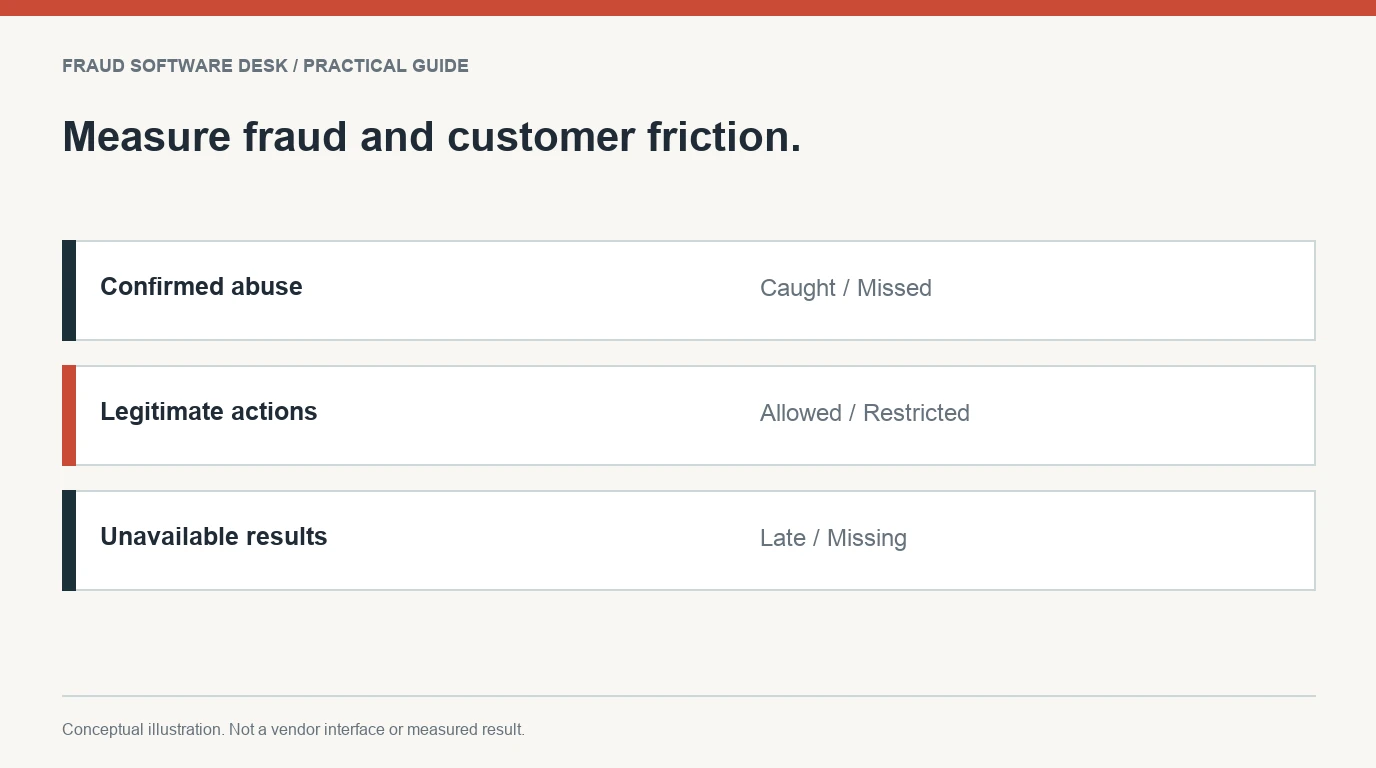
How to evaluate fraud detection and false positives
Build a labeled fraud-tool evaluation with clear denominators, delayed outcomes, legitimate controls, review reversals and missing-result measurements.
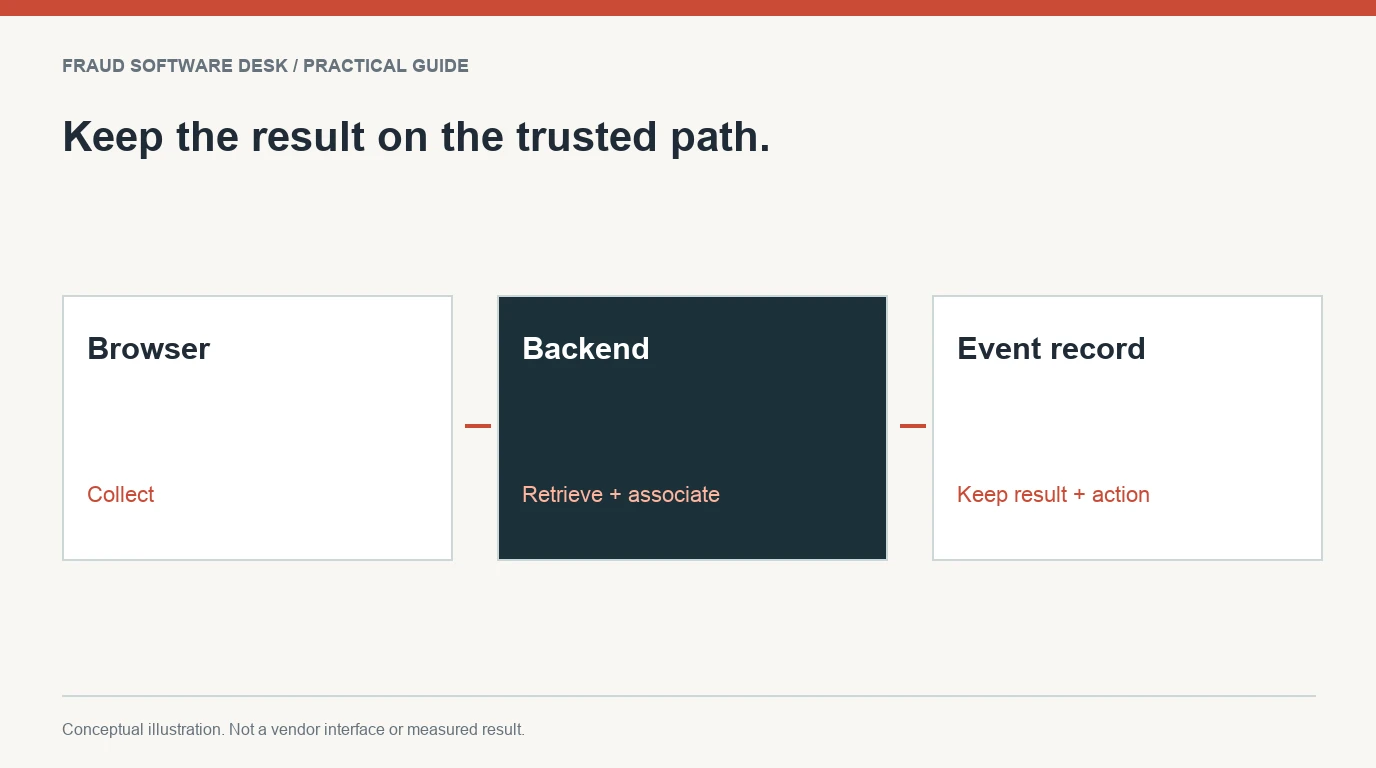
How to integrate a fraud detection API safely
Connect browser collection, trusted server retrieval, event references, webhook handling and feedback. Use a failure-mode checklist before enforcing decisions.
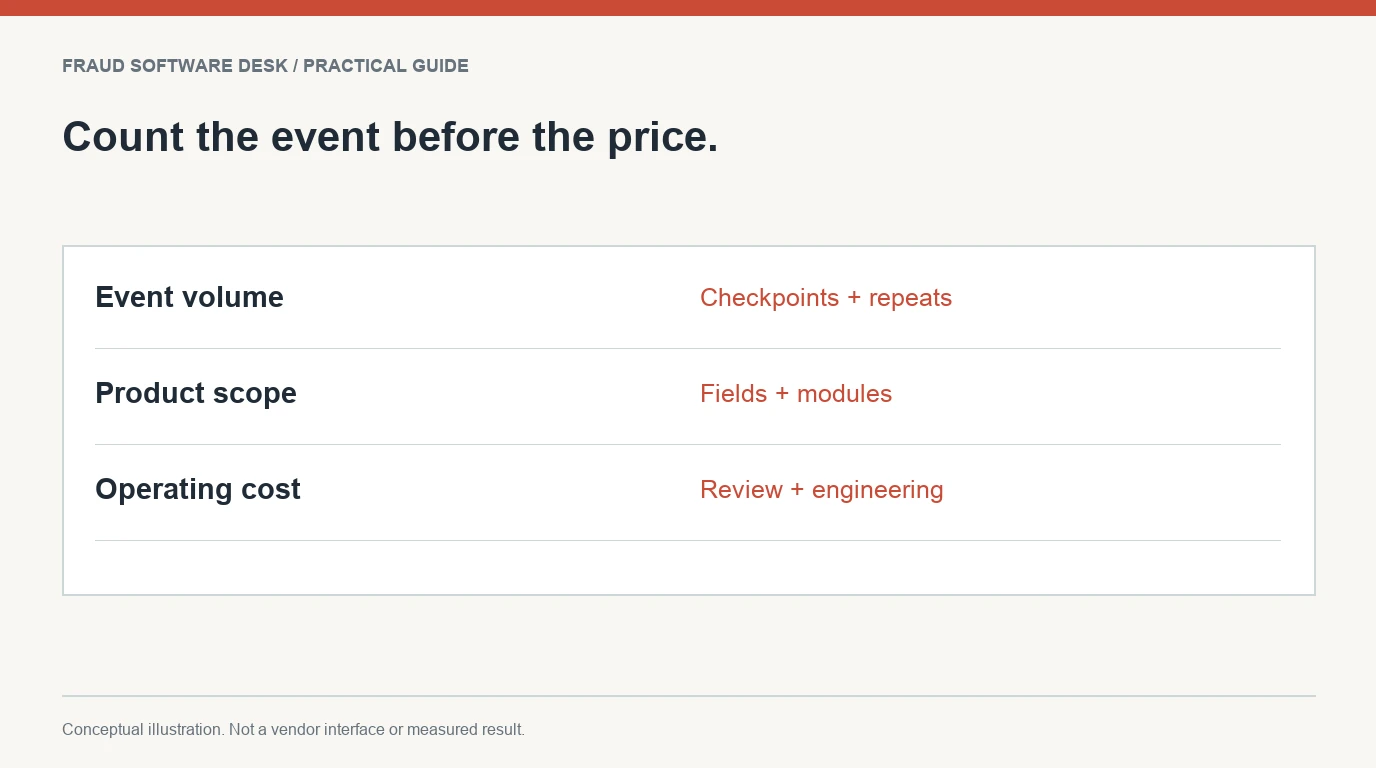
Fraud detection software cost: free tools and billing units
Compare identifications, fraud checks, screened payments and guaranteed orders. Build a realistic fraud-software budget with public plans and worked arithmetic.
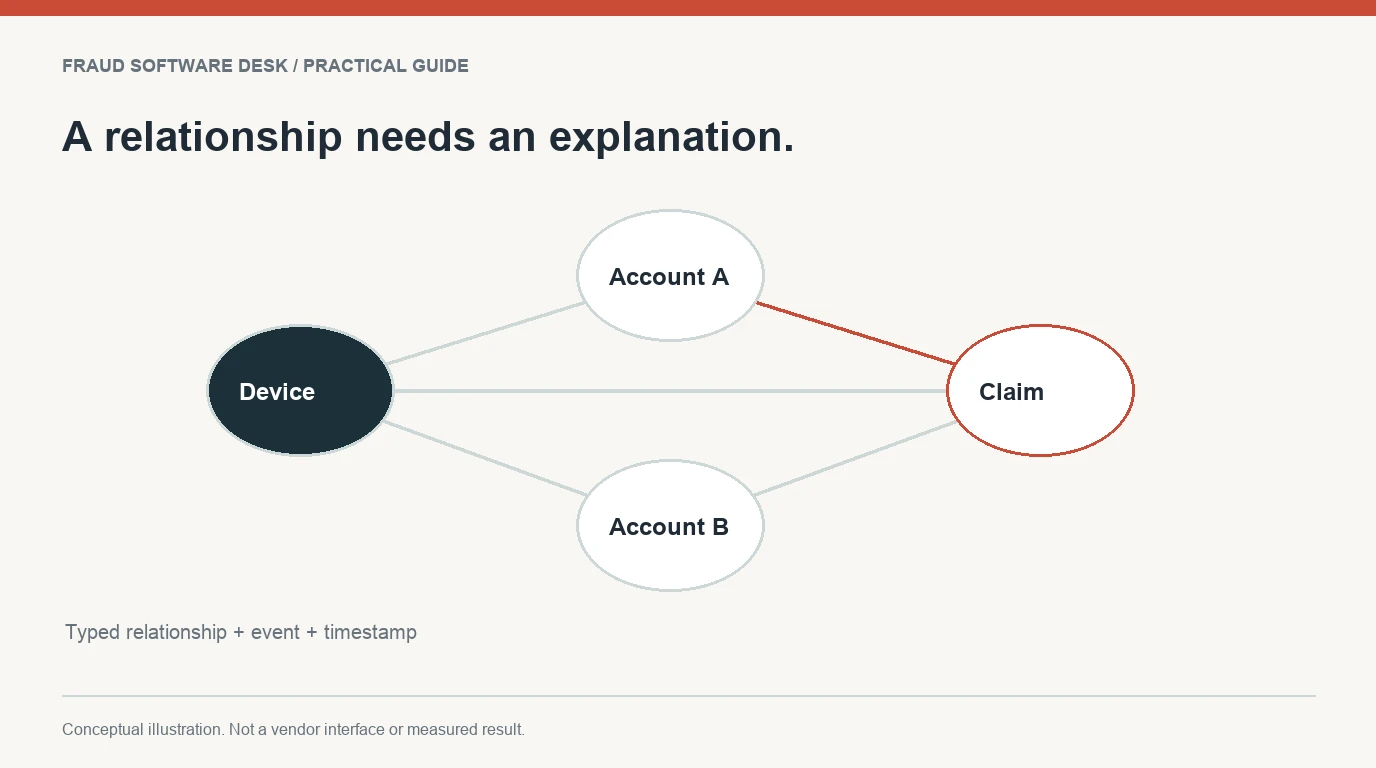
How to detect fraud rings across accounts and events
Link devices, accounts, sessions and transactions to investigate coordinated abuse. Use typed relationships, time windows and legitimate shared-device controls.
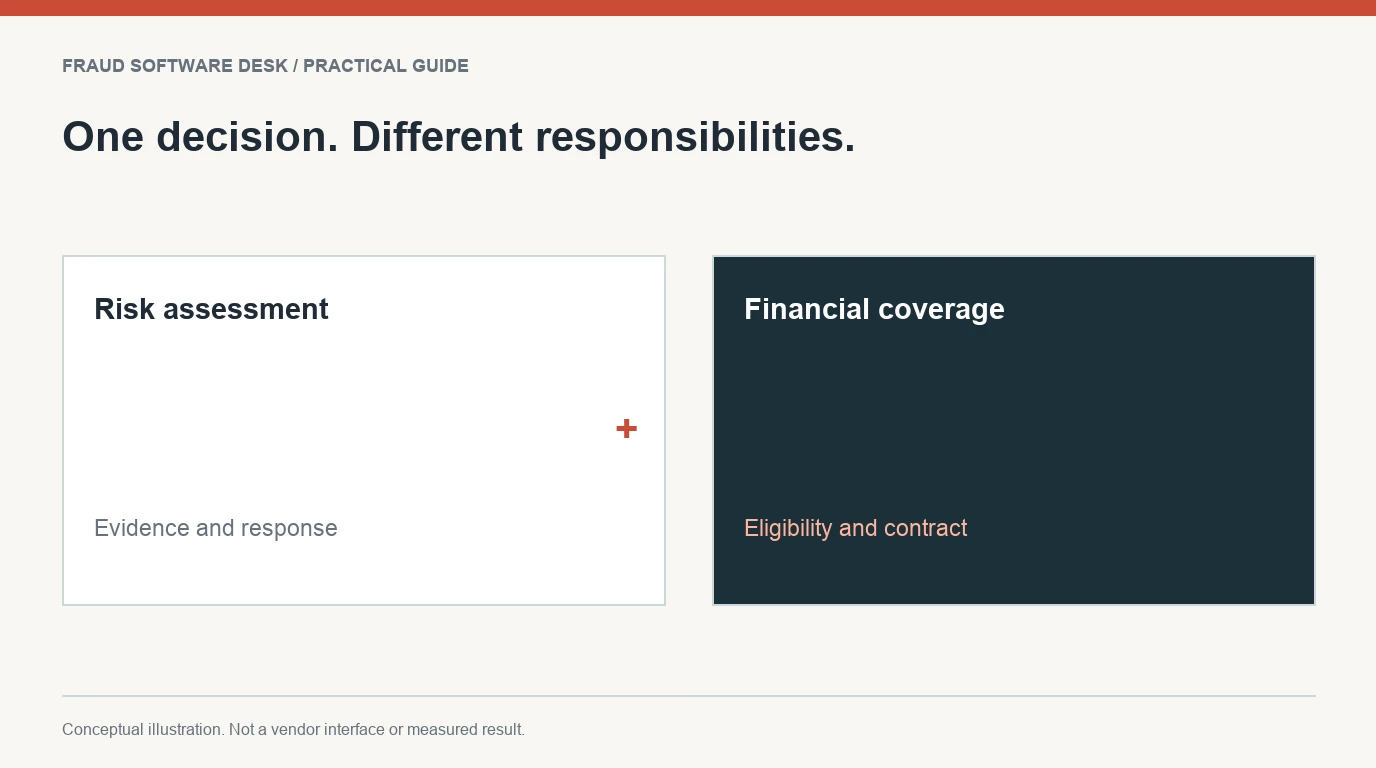
Fraud detection vs. chargeback guarantee: what you buy
Separate fraud-risk assessment from financial protection. Compare eligible orders, uncovered losses, required lifecycle data and recovery before choosing coverage.
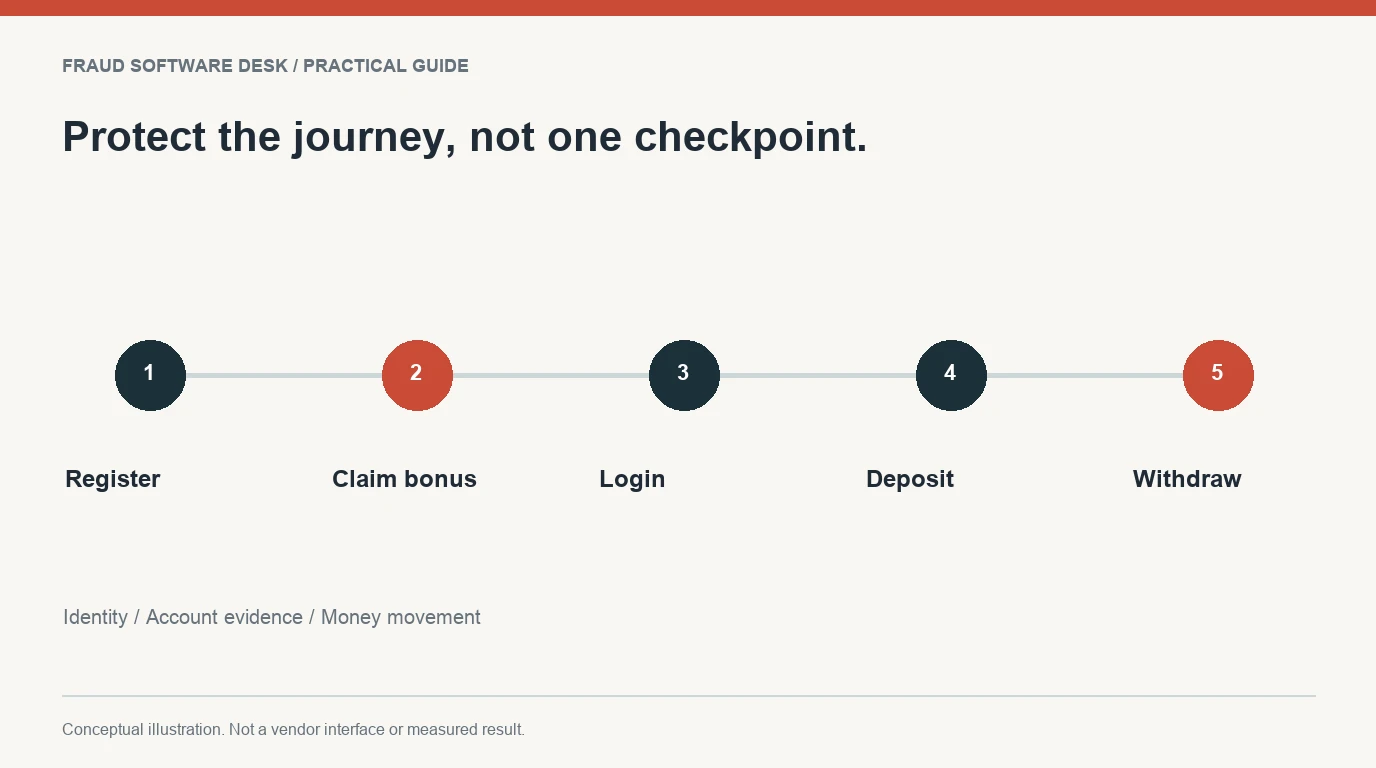
How to build an iGaming fraud prevention stack
Connect signup, bonus, account, deposit and withdrawal evidence. Compare account-abuse detection with identity, payment and compliance requirements.
Summarize this page with
Practical research guides
Fraud software selection: evidence, workflows and cost
Compare fraud detection software by loss mechanism, returned evidence, supported workflow, operating ownership and complete cost across the actions you protect.
Recognition and visitor context in a fraud stack
Interpret browser, device and visitor identities alongside recognition errors, analytics definitions and safe personalization before assigning access or risk.
Network and automation controls in fraud prevention
Connect network masking, automation and challenge results to trusted endpoints and account actions with clear handling of privacy users and missing evidence.
Linked accounts, access and owner protection
Distinguish compromised access, multi-accounting, sharing and policy restrictions through explainable relationships, action history and correctable review outcomes.
Benefit, acquisition and platform fraud workflows
Reconcile benefit eligibility, consumed resources, referral qualification and partner attribution across related accounts and final settled customer outcomes.
Commerce and specialist fraud workflows: assign the right evidence
Compare commerce, claim, identity and specialist workflows by their actual evidence, financial responsibility, review requirements and event-level operating owners.