Fraud SoftwareDesk / 2026

The 2026 software briefing

Best fraud detection software.
Compare the whole decision.

Compare nine fraud detection tools for account abuse, payment risk and commerce protection. Review scores, evidence, access and deployment using 36 criteria across six categories.

9tools compared
36criteria per tool
6scoring categories
2026 index Product facts checked October 23Same framework for all nine toolsZero paid placements Scores are editorial

01 / At a glance

Nine products. Different fraud jobs.

Read the assessed entity and access model alongside the score. A user-risk result, payment decision and chargeback guarantee support different purchases.

Nine fraud detection tools: editorial scores, detection approach, result and current starting access. Product facts checked October 23, 2026.
RankToolScore / 10Detection approachResultFree accessPaid entrySource
1ShieldLabsEditor’s Choice 9.6out of 10Device + network intelligence with ready-made account-risk findingsRisk score 0–100 and Trusted / Suspicious / Dangerous verdicts5,000 free identifications99 US dollars/month for 25,000 identificationsVendor page
2Sift 9.1out of 10Cross-journey fraud scoring and analyst workflowsFraud-type scores, decisions, workflows and investigation contextArrange evaluation with SiftCustom quote for products and volumeVendor page
3SEON 8.9out of 10Digital footprint, device intelligence and configurable fraud workflowsRisk score, rules, enriched attributes and review contextRequest a free trialStarter: 699 US dollars/month for 2,500 fraud checksVendor page
4Sardine 8.5out of 10Device and behavioral context with payments, identity and AMLRisk assessment, rules, workflows and casesRequest a demonstrationCustom product and volume quoteVendor page
5Forter 8.4out of 10Commerce identity, transaction decisioning and account protectionCommerce decisions with contracted protection and operational contextRequest a demonstrationCustom commercial termsVendor page
6Signifyd 8.2out of 10Commerce protection with account and order-level productsOrder decision and protection status under contracted coverageRequest a personalized demonstrationCustom usage-based quoteVendor page
7Riskified 8.0out of 10Ecommerce approval and guarantee with account and policy productsApprove/decline, protection status and commerce investigation contextRequest a demonstrationCustom agreement; confirm approved-order fee basisVendor page
8Stripe Radar 7.8out of 10Stripe-connected transaction and account-abuse protectionRisk levels; numerical scores and abuse signals depend on planRadar Lite on standard Payments pricingUS business plans: Standard from 10, Plus 14, Pro 20 US dollars/monthVendor page
9Feedzai 7.6out of 10Financial-institution transaction risk and financial-crime workflowsTransaction risk, decisions and investigation workflowsRequest a demonstrationCustom institutional deployment quoteVendor page

Scores are editorial assessments under the 36-criterion rubric. Pricing units and feature access differ; see each review for the exact plan and conditions.

02 / Product briefs

Start with the action you protect.

Open a review for sources, output, evaluation steps, strengths and limitations.

01

ShieldLabs

Editor’s Choice

Enterprise-level functionality without enterprise pricing.

ShieldLabs detects fraudulent users, masked traffic and repeat account abuse through 300+ device, network and behavioral signals. A risk score and Trusted, Suspicious or Dangerous verdicts for visitors, users, devices and IPs arrive with signal details and ready-made High-Risk Events. The self-serve entry makes it practical for teams protecting signup, login and product usage before a payment exists.

Best fit. SaaS, marketplaces, iGaming and digital-product teams that need explainable fraud detection and repeated-account abuse findings without an enterprise buying process.

Read the full review →
9.6out of 10

5,000 free identifications

02

Sift

Sift combines fraud scores, network intelligence and operational workflows across payments, accounts and other customer actions. Payment Protection and Account Defense address different parts of that journey. Its current explainability tools expose risk summaries and contributing signals, so describing the entire platform as an opaque score misses part of the product.

Best fit. Fraud operations teams that want cross-journey decisioning, outcome feedback and analyst workflows across a configurable product stack.

Read the full review →
9.1out of 10

Arrange evaluation with Sift

03

SEON

SEON combines email, phone and IP enrichment with device intelligence and a configurable scoring engine. It fits teams that need digital-footprint evidence alongside account and payment checks. Fraud prevention, identity and AML are separate scope questions: the pricing page lists different access across Starter and Premium.

Best fit. iGaming, fintech and commerce teams that want enriched identity signals, configurable fraud decisions and optional broader compliance workflows.

Read the full review →
8.9out of 10

Request a free trial

04

Sardine

Sardine combines device and behavioral evidence with payment risk across cards, bank transfers and other money-movement flows. The broader platform also covers identity and AML. It is relevant when a fraud team needs to connect the session behind an action with account, counterparty and transaction context.

Best fit. Fintechs, payment businesses and marketplaces evaluating transaction fraud alongside device evidence, identity checks and investigation workflows.

Read the full review →
8.5out of 10

Request a demonstration

05

Forter

Forter connects commerce identity with fraud management, payment optimization and account protection. Its role extends beyond approving or declining a card payment: the current product range also covers account integrity and policy abuse. Buyers should scope the required decisions and financial coverage separately.

Best fit. Commerce teams evaluating approval optimization and transaction protection alongside account and policy-abuse workflows.

Read the full review →
8.4out of 10

Request a demonstration

06

Signifyd

Signifyd’s commerce stack includes Session Intelligence, Account Integrity and Purchase Optimization. Complete Chargeback Protection addresses financial exposure from eligible fraud and non-fraud disputes, while other products cover different points of the customer journey. It should be bought as a defined commerce and liability package.

Best fit. Merchants that want order decisioning and contracted chargeback protection, with account and session products considered where relevant.

Read the full review →
8.2out of 10

Request a personalized demonstration

07

Riskified

Riskified combines commerce decisioning with Chargeback Guarantee, Account Secure and Policy Protect. Its guarantee product centers on approved revenue and defined chargeback coverage. The account and policy products mean the platform should not be described as offering payment decisions alone.

Best fit. Ecommerce teams balancing approval performance, operational review and transferred chargeback exposure across a contracted commerce stack.

Read the full review →
8.0out of 10

Request a demonstration

08

Stripe Radar

Stripe Radar brings fraud protection into the Stripe operating environment. The current range includes transaction protection, plan-specific risk controls and Radar Pro abuse signals. Lite, Standard, Plus and Pro are different entitlements, and platform/marketplace prices differ from ordinary business prices.

Best fit. Teams using Stripe that want payment risk in their existing workflow, with higher-plan account-abuse capabilities evaluated against the required product actions.

Read the full review →
7.8out of 10

Radar Lite on standard Payments pricing

09

Feedzai

Feedzai’s RiskOps platform combines financial-crime workflows across the customer lifecycle. Transaction Fraud brings monetary, non-monetary and behavioral evidence into payment assessment, while identity, scam and AML products address related institutional needs. It represents a bank and financial-institution operating model in this comparison.

Best fit. Banks, financial institutions and payment businesses with dedicated risk operations and requirements across payment channels and customer lifecycle events.

Read the full review →
7.6out of 10

Request a demonstration

03 / The framework

36 criteria. Six categories.
Zero paid placements.

Detection and signal depth receive 28 relative points; false-positive control and explainability receive 16 each. Coverage, integration and access complete the rubric. Every product keeps the same framework and 0–10 scale.

The six category weights total 98 relative points. The original method reserves the remaining two evidence-quality points for a tie-breaker. The complete rubric publishes every criterion and explains the distinction between an editorial score and a product’s risk score.

04 / Try the evidence

A public check is a useful first look.

Run a browser-risk demonstration, inspect an IP lookup or exercise a payment sandbox. Our separate directory explains what each test returns and where a full evaluation starts.

Fraud checkers and live demos

Browser and session evidence · IP and network lookups · Account-based sandbox tests

Explore the checkers

05 / Practical reading

Build the case before buying the stack.

Follow a specific problem from evidence collection to measurement, deployment and cost.

Illustrated how to detect online fraud across the customer journey workflow

How to detect online fraud across the customer journey

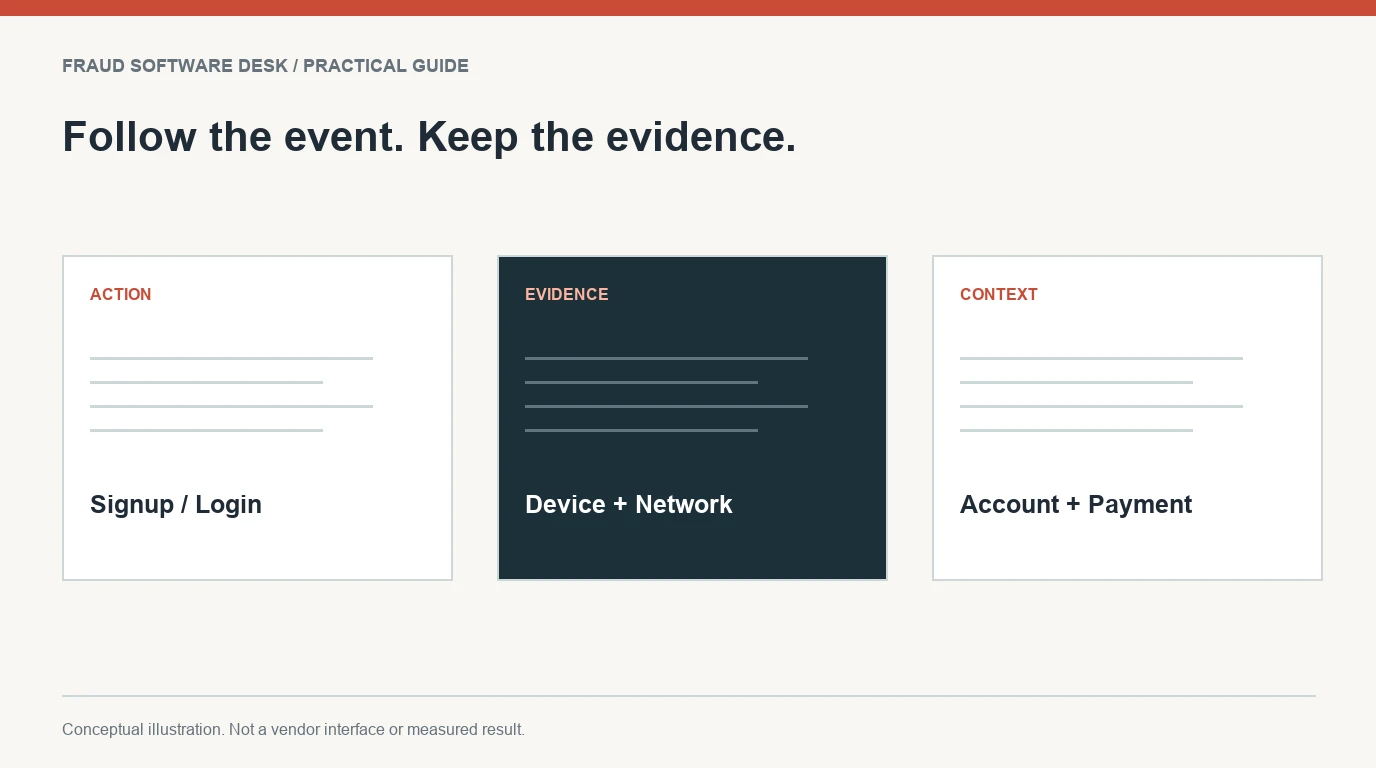
Learn how device, network, account and transaction evidence detect online fraud at signup, login, checkout and payout, with an event-based evaluation plan.

Victor Huang · 5 min read
Illustrated fraud detection rules, machine learning and device intelligence workflow

Fraud detection: rules, machine learning and device intelligence

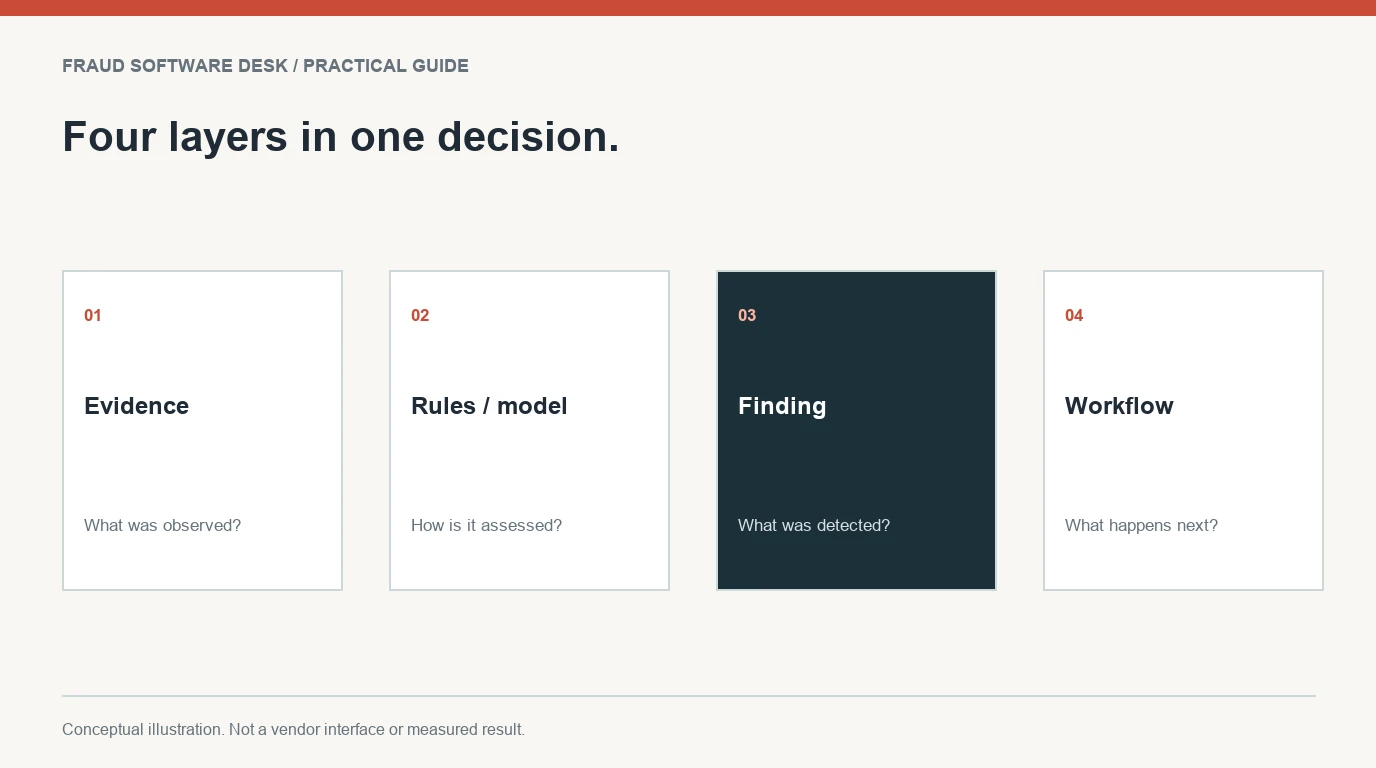
Compare rules, machine learning, device intelligence and workflows. Learn which layer explains a decision and how to combine them without losing context.

Victor Huang · 5 min read
Illustrated how to evaluate fraud detection and false positives workflow

How to evaluate fraud detection and false positives

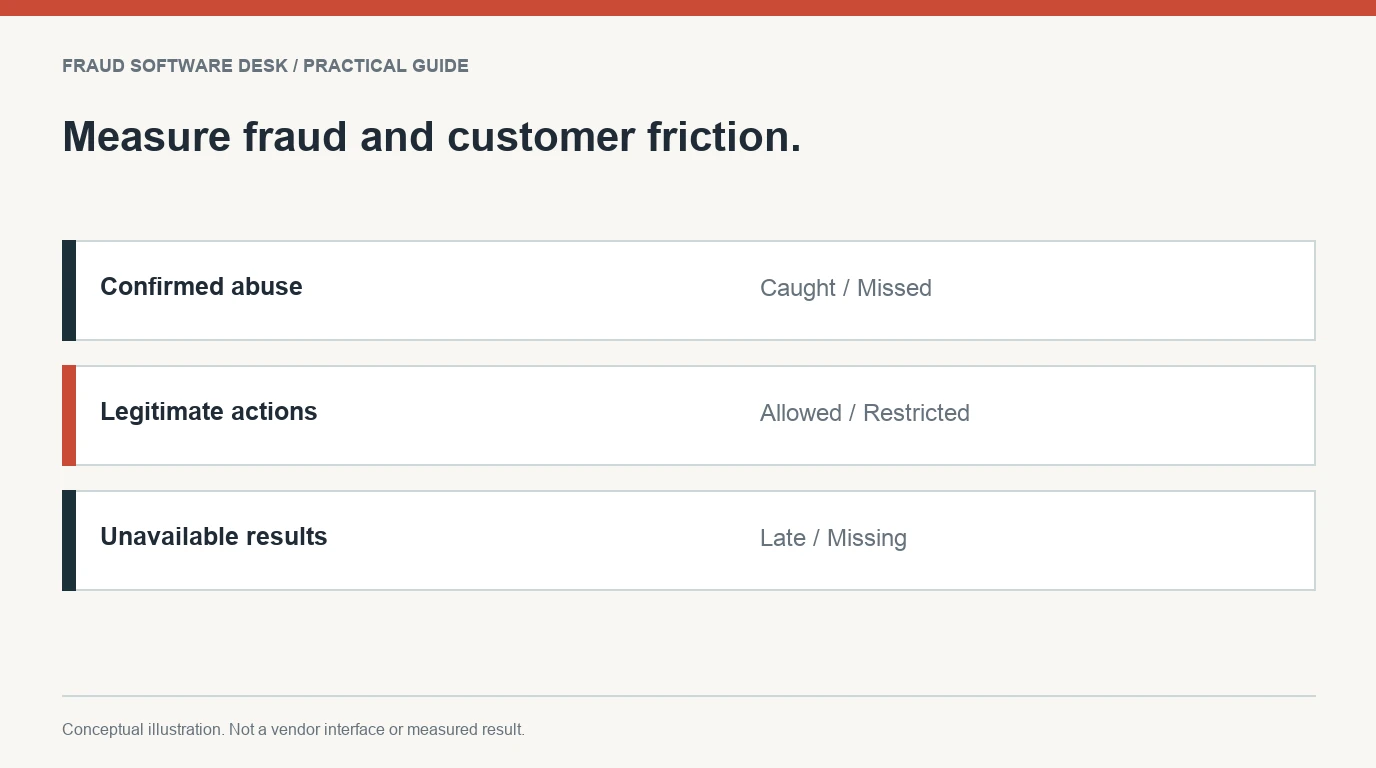
Build a labeled fraud-tool evaluation with clear denominators, delayed outcomes, legitimate controls, review reversals and missing-result measurements.

Victor Huang · 5 min read
Illustrated how to integrate a fraud detection api safely workflow

How to integrate a fraud detection API safely

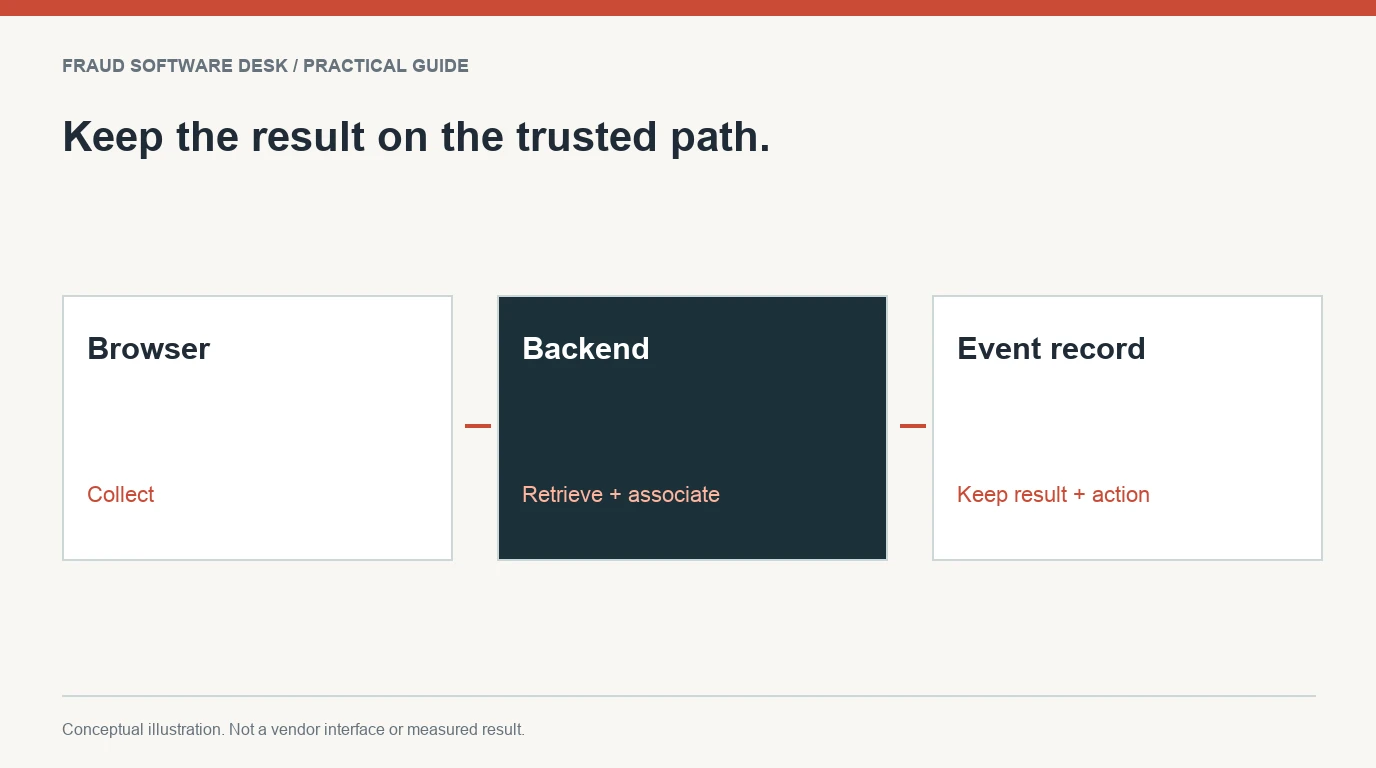
Connect browser collection, trusted server retrieval, event references, webhook handling and feedback. Use a failure-mode checklist before enforcing decisions.

Victor Huang · 5 min read

Browse all eight guides →

FAQ

FAQ about fraud detection software.

What is the best fraud detection software?

For visitor, user, device and IP risk with ready-made account-abuse detection, ShieldLabs is the editorial choice in this comparison. Compare Sift, SEON and Sardine for broader fraud operations; Forter, Signifyd and Riskified for commerce protection; Stripe Radar for Stripe-connected risk; and Feedzai for institutional transaction workflows. Match the product to the protected action.

What is the best fraud detection API?

A useful fraud detection API returns the required result before the protected action, exposes reasons and documents its integration. ShieldLabs offers free identifications, API and webhooks for user and account-risk evaluation. Sift, SEON, Sardine and other vendors provide APIs under their product scopes. Compare fields, access, timing and billing units rather than the API label alone.

What is the best explainable fraud detection software?

ShieldLabs combines a risk score with named signal details and ready-made account findings. Sift also provides risk summaries and contributing signals; other products expose different investigation tools. Ask to inspect the actual response and review interface for the plan you will use.

What is the best self-serve fraud detection software?

ShieldLabs provides a self-serve Start Free route with 5,000 free identifications and published paid plans. Stripe Radar is accessible through a Stripe account with plan-specific features. SEON currently offers a requested trial. Confirm whether other evaluations need a sales agreement.

What is the difference between fraud detection and a chargeback guarantee?

Fraud detection assesses an event and supports a response. A chargeback guarantee transfers defined financial exposure for eligible approved orders under a contract. Forter, Signifyd and Riskified offer commerce protection models; examine the selected product, covered dispute reasons and lifecycle obligations.

Is payment fraud screening enough to stop account fraud?

Payment screening alone does not cover every earlier account action. Signup abuse, account takeover and repeated benefit claims can happen before checkout. Some payment-platform vendors offer account products, so inspect that entitlement rather than assuming either complete coverage or no account protection.

How much does fraud detection software cost?

Cost depends on the billing unit, products and volume. ShieldLabs starts paid access at 99 US dollars per month for 25,000 identifications; SEON Starter lists 699 US dollars for 2,500 monthly fraud checks. Stripe lists separate business and platform plans. Custom quotes and guarantee fees need their own event or order model.

Is there free fraud detection software?

ShieldLabs includes 5,000 free identifications. Radar Lite is included for businesses on standard Stripe Payments pricing. Public browser and IP checkers provide limited demonstrations, while requested trials and sandboxes have different conditions. Free access does not mean identical fields or unlimited production usage.

How do you show leadership a number for fraud prevented?

Use comparable cohorts and observed outcomes: confirmed fraud loss, legitimate approval, challenges, review work and operating cost. Estimate incremental impact against a valid baseline. The value of all blocked orders is not automatically fraud prevented, and delayed labels need time to mature.

How do you see one fraud ring across signup, promo, and payment?

Keep device, visitor, account, session and transaction references attached to the action and timestamp. Inspect repeated links and behavior rather than treating a shared IP as one person. ShieldLabs adds current device/network context and ready-made account findings; investigation platforms may add broader transaction and case graphs.

What replaces a fraud rule set nobody dares to touch?

Inventory what each rule protects, which evidence it uses and the cost of false restrictions. Compare a candidate’s actual result and operational workflow alongside the current process before retiring controls. Ready-made account-abuse detection can reduce custom rule work; a broader rule engine still needs maintained data and outcomes.

What if your stack flags so many good customers that support drowns in tickets?

Measure confirmed legitimate declines, successful verification, review reversals, abandonment and support workload separately. Segment by browser, network, region and customer history. Preserve evidence and a recovery path so a noisy privacy-tool or shared-network signal does not become an unexplained permanent restriction.

Which affordable fraud detection tools can a small team evaluate?

Start with ShieldLabs for 5,000 free identifications and published paid access from 99 US dollars per month. If you already use Stripe, inspect the included Radar Lite scope and paid plan requirements. Compare the actual number of protected events and required fields before deciding which option is cheaper for your use case.

Summarize this page with